Magnetic Door Sensor (Reed Switch)
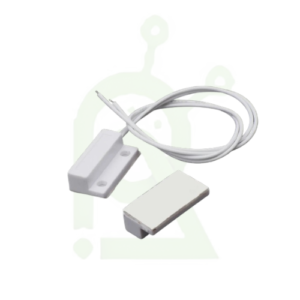
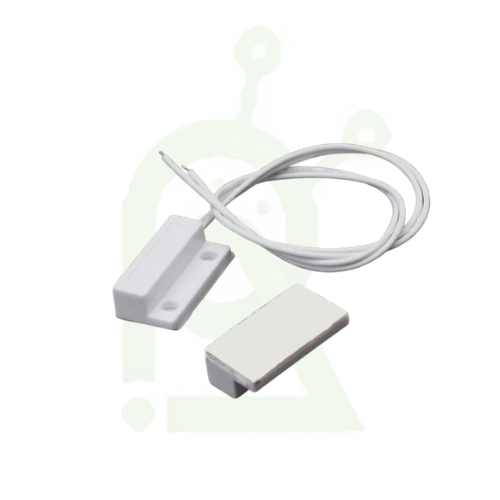
The Magnetic Door Sensor (Reed Switch) is a simple and reliable device used to detect the open or closed state of doors and windows. It consists of a reed switch and a matching magnet, which work together to trigger a signal when separated or aligned, making it ideal for security and automation systems.
Key Features
- Reed Switch Mechanism – Magnetic contact-based switching
- Normally Open/Closed Options – Flexible configuration
- No Power Required for Switching – Passive sensor operation
- Compact & Lightweight – Easy to install on doors/windows
- High Reliability – Long life with minimal wear
- Fast Response Time – Instant detection of movement
Applications
- Home Security Systems – Door/window intrusion detection
- Smart Home Automation – Trigger lights, alarms, or notifications
- Industrial Safety Systems – Access monitoring
- Cabinet/Locker Monitoring – Open/close detection
- DIY Electronics Projects – Simple position sensing
Technical Specifications
- Sensor Type: Reed Switch (magnetic contact)
- Operating Voltage: Depends on external circuit (typically up to 30V)
- Switch Type: Normally Open (NO) / Normally Closed (NC)
- Contact Rating: Low current switching (model dependent)
- Operating Distance: ~10–20 mm (varies by magnet strength)
- Mounting Type: Screw / Adhesive
- Cable Length: Model dependent
Product Example
Magnetic Door Sensor Reed Switch (NO Type)
A simple magnetic contact sensor for door and window monitoring systems.
Why Choose Magnetic Door Sensor?
- Simple and cost-effective solution
- No power needed for sensing
- Easy to install and integrate
- Reliable for long-term use
- Compatible with Arduino, ESP32, alarm systems
⚠️ Important Notes
- Ensure proper alignment between magnet and switch
- Not suitable for high-current switching
- Avoid strong mechanical shocks
- Mount securely to prevent false triggers
- Check NO/NC type before use
If you want, I can also provide:
- Wiring with ESP32 / Arduino (very useful for you)
- Home security project using this sensor
- Comparison: reed switch vs hall effect sensor
- Best placement tips for accurate detection