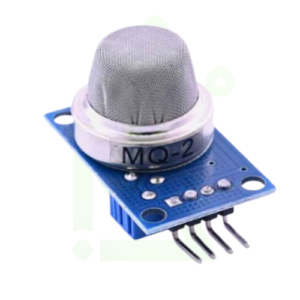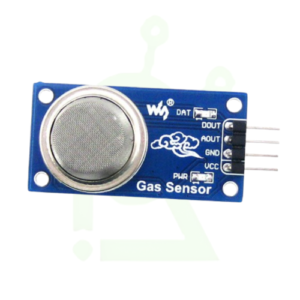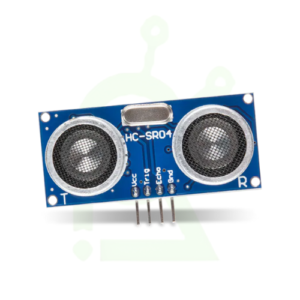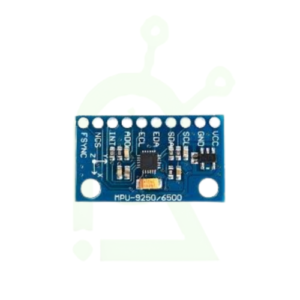
37-in-1 Sensor Kit for Arduino, Raspberry Pi & ESP32
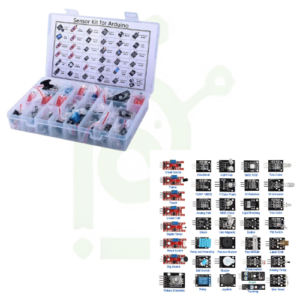
The 37-in-1 Sensor Kit is a comprehensive collection of commonly used sensors and modules, ideal for beginners, students, and developers. It provides a wide range of input devices for learning electronics, prototyping, and building interactive projects with Arduino, Raspberry Pi, and ESP32.
Key Features
- All-in-One Sensor Kit – 37 different sensors and modules
- Beginner Friendly – Perfect for learning electronics and programming
- Wide Compatibility – Works with Arduino, ESP32, Raspberry Pi
- Plug-and-Play Modules – Easy interfacing with minimal wiring
- Variety of Sensors – Includes analog and digital modules
- Compact & Organized Set – Ideal for prototyping and experiments
Applications
- STEM Education – Learning electronics and coding
- DIY Projects – Home automation and robotics
- IoT Development – Sensor-based smart systems
- Prototyping – Testing ideas quickly
- Embedded Systems – Multi-sensor integration projects
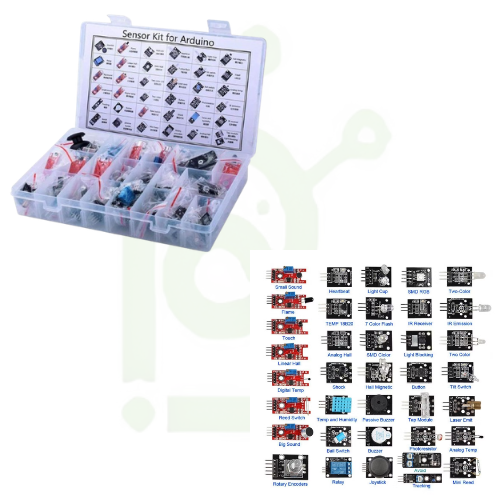
Typical Included Modules
(May vary slightly by manufacturer)
- Temperature & humidity sensor
- Light sensor (LDR module)
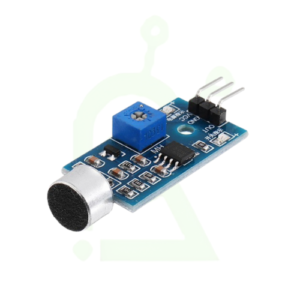
- Sound sensor
- Flame sensor
- IR receiver & transmitter
- Tilt sensor
- Relay module
- Joystick module
- Hall effect sensor
- Touch sensor
- Buzzer module
- RGB LED module
- Laser module
- Rain sensor
- Rotary encoder
- Line tracking sensor
- And many more…
Technical Specifications
- Number of Modules: 37
- Operating Voltage: 3.3V / 5V compatible
- Interface: Analog / Digital output
- Compatibility: Arduino, ESP32, Raspberry Pi
- Packaging: Boxed kit (varies by seller)
Product Example
37-in-1 Sensor Kit for Arduino & Raspberry Pi
A complete starter kit with multiple sensors for learning and prototyping electronics projects.
Why Choose 37-in-1 Sensor Kit?
- Covers a wide range of sensors in one package
- Cost-effective compared to buying individually
- Ideal for beginners and students
- Helps explore multiple project ideas
- Great for training and workshops
⚠️ Important Notes
- Module list may vary slightly by manufacturer
- Some sensors require external libraries/code
- Not all modules are high-precision (educational use)
- Check voltage compatibility (3.3V vs 5V)
- Basic electronics knowledge recommended